



How Rizon is building borderless banking on Due's infrastructure
- Rizon gives freelancers, remote workers, and digital nomads a non-custodial global account, without needing a traditional bank in every country they work with
- Due powers the local currency virtual accounts and compliance infrastructure behind that account, across 9 currencies
- Local deposits convert automatically to stablecoins, so users get paid the way their clients already pay, without either side touching a crypto exchange
Getting paid across borders has historically meant choosing between speed and control. Freelancers and remote workers paid from abroad either accept slow, expensive transfers through traditional banking, or hand their money to a custodial platform that can freeze or restrict it without warning.
Rizon is built to remove that choice. A non-custodial global banking alternative, Rizon gives users a multi-currency account to receive, hold, and spend money, backed by a Visa card, with users keeping control of their funds the whole way through.
To power the accounts and compliance behind that promise, Rizon chose Due.
The problem: remote workers are underserved by both banks and crypto
Freelancers, remote workers, and digital nomads face a specific set of problems getting paid. Traditional banks are slow to onboard people without a fixed address in one country, correspondent banking adds cost and delay to every transfer, and most crypto-native alternatives ask users to trade custody and simplicity for control.
Rizon set out to build something that didn't force that trade-off: a real account that receives local currency the way clients already send it, converts it to stablecoins automatically, and never takes custody of the user's funds along the way.
The challenge was not the product experience. It was everything underneath it. Standing up local currency accounts and compliance coverage market by market, while keeping the whole system non-custodial, is a heavy lift for any team building at Rizon's pace.
Why Rizon chose Due
"We believe the future of dollar banking will be built through strong global infrastructure partnerships. Working with Due is another step toward making modern financial services more accessible, seamless, and internet-native for users worldwide." - Ignas Survila, CEO at Rizon
Instead of building local currency coverage and compliance market by market, Rizon integrated once with Due. Through a single API, they gained local currency virtual accounts, KYC/AML infrastructure, and automatic fiat-to-stablecoin conversion. Two things mattered most: broad currency coverage from day one, and not having to rebuild that coverage every time they add a new market.
What's live: currencies powering Rizon today
Rizon uses Due's infrastructure to issue virtual accounts in:
- USD (ACH / Wire / SWIFT)
- EUR (SEPA / SEPA Instant)
- GBP (Faster Payments / BACS / CHAPS)
- AED (IPP / FTS)
- BRL (PIX / TED)
- MXN (SPEI)
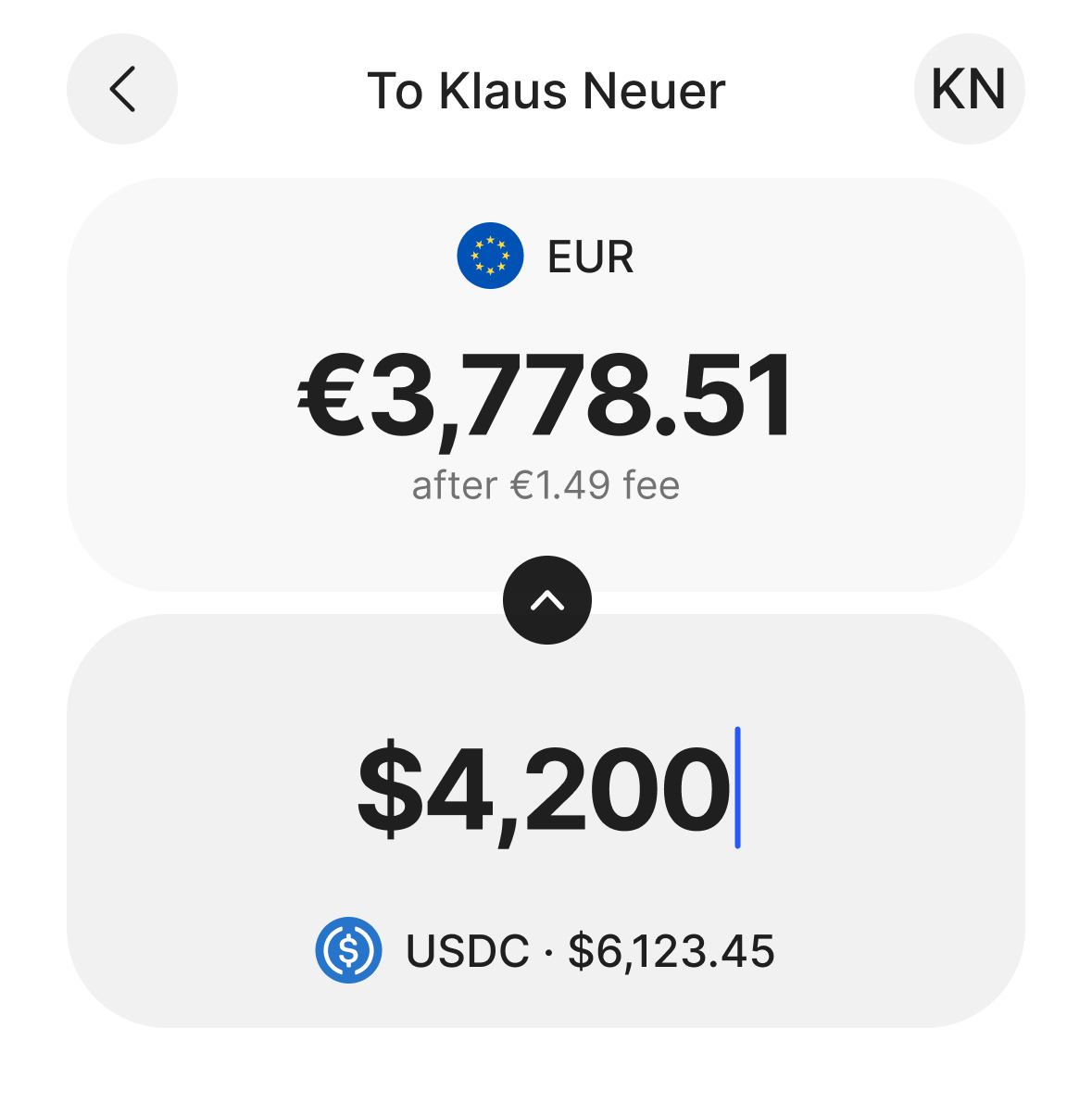
Deposits into these accounts convert automatically to USDC or USDT and settle in the user's Rizon wallet.
In practice, that means:
- A developer in Buenos Aires paid by a client in Berlin
- A US company paying a contractor in Manila through Deel
- A creator in Warsaw collecting platform payouts and sponsor fees
This is how Rizon's users actually get paid.
The bigger picture: stablecoin-native banking's infrastructure question
Stablecoin-first neobanks are a new category, and a fast-growing one. The question underneath all of them is the same one Rizon's users never see: who issues the accounts, verifies the users, and converts the money?
Infrastructure that does all three, compliantly and across markets, is still rare. Most providers scale corridor by corridor. Due builds that coverage comprehensively: one API connecting SEPA, ACH, PIX, SWIFT, and other local rails across 80+ countries, run through regulated entities including MiCA CASP-authorized entity in the EU.
For companies like Rizon building the next generation of stablecoin banking, that infrastructure is the foundation.
Launch stablecoin banking anywhere with Due
Rizon is part of a growing number of neobanks and fintechs using Due's infrastructure to onboard users and move money across currencies without building each rail independently. Sorbet, a payments platform for MENA, is another.
For neobanks building on Due, that infrastructure means:
- One API for 80+ countries, instead of a separate banking partner and contract per market
- Embedded KYC/KYB, so onboarding doesn't require a separate compliance vendor
- Mid-market FX rates on every conversion between fiat and stablecoins
- Instant settlement, with webhook notifications at each stage of a transfer
- Regulated entities in each region, including MiCA CASP-authorized Due Network S.L. in the EU
If you're building a stablecoin-native product, Due's API documentation covers virtual accounts, onboarding, and fiat-to-stablecoin transfers.