



How do fintechs handle cross-border payments without building in-house
Most fintechs do not build their own cross-border payment infrastructure. The ones that try spend 12 to 24 months on licensing before they process a single transaction.
The realistic alternatives fall into three models: a single payment API covering multiple markets, a stack of regional payment providers assembled corridor by corridor, or a Banking-as-a-Service (BaaS) layer via a sponsor bank. Each model carries different trade-offs on coverage, cost, time to market, and complexity.
What building in-house actually means
Building in-house means owning the infrastructure directly. That means banking relationships, licenses, and a compliance stack across every corridor you want to serve.
Here is what that involves.
- Banking relationships. A fintech needs a SWIFT correspondent account or bilateral bank agreement in each corridor it wants to serve. Each one requires due diligence, capital deposits, and ongoing compliance reporting.
- US licensing. There is no single national money transmitter license in the US. Each state runs its own regime. Startup costs for all 50 states can exceed $1 million, including fees, surety bonds, legal, and compliance setup. Annual maintenance starts around $225,000 and scales with volume. California takes 12 to 18 months to process an application. New York takes 12 to 24 months.
- International licensing. Every jurisdiction adds a separate track. EU, LATAM, and APAC each have their own frameworks. MiCA CASP authorization is required for stablecoin activity in the EU.
- Compliance infrastructure. KYC, AML monitoring, sanctions screening, and Travel Rule compliance need to run across every corridor. Building this from scratch takes 2 to 3 years.
- Engineering. Each local rail needs its own integration. Reconciliation, exception management, and regulatory reporting are all ongoing workstreams.
This is why most fintechs choose to partner instead. The three models below are the realistic options.
The three models compared
Model 1: single-API infrastructure provider
A single-API provider connects a fintech to multiple payment rails and markets through one integration. The provider manages banking relationships, licenses, and compliance. The fintech inherits that coverage on day one.
In practice, this means access to local rails like SEPA in Europe and PIX in Brazil. It also means stablecoin settlement for cross-currency flows. There is no need to negotiate a separate banking relationship per corridor.
How Sorbet did it
Sorbet is a payments platform for freelancers and SMBs across MENA and Africa. It needed payouts in SAR, AED, KES, INR, PKR, and EGP from day one. Rather than building six separate banking relationships, Sorbet integrated once with Due's API and launched across 80+ markets.
Co-founder Maher Ayari described what mattered most: "Due already had the payment rails and compliance infrastructure in the markets we wanted to expand into. That allowed us to move faster, launch confidently, and scale without rebuilding the connectivity layer ourselves."
When this model works
- Fintechs launching in multiple markets at once
- Teams that cannot yet sustain a dedicated payments engineering function
- Products where corridor breadth matters more than per-corridor pricing
When it breaks down
If the provider does not cover a specific corridor, you are limited by their network. At very high volume, provider margins may exceed the cost of a direct banking relationship. Most fintechs reach this point later than they expect.
Model 2: regional PSP stack
The regional stack model means using a different payment provider for each major market. Each provider is chosen for depth in that specific corridor.
This gives more control over provider selection. It also means more integrations, more relationships to manage, and more points of failure.
The trade-offs
Each provider has its own API, reconciliation format, and error handling. When one provider restricts a corridor or changes pricing, you deal with that disruption directly. Managing 8 to 12 regional providers can consume a dedicated engineering and ops team.
For more on how a fragmented provider stack affects unit economics, see how neobanks reduce cross-border payment costs at scale.
When this model works
- Fintechs with high volume concentrated in a few markets
- Teams with engineering capacity to maintain multiple integrations
- Products where deep local optimization in specific corridors justifies the complexity
Model 3: BaaS via sponsor bank
A BaaS model means using a licensed bank's regulatory coverage. The bank holds the licenses and handles the compliance. The fintech acts as a technology layer.
This works well for US domestic payment flows. It lets a fintech avoid the multi-state money transmitter licensing process entirely.
The trade-offs
Most US sponsor banks have limited international coverage. For cross-border products, the fintech ends up layering on additional providers. This reintroduces the complexity of the regional PSP stack.
When this model works
- Fintechs focused on US domestic flows
- Early-stage companies that need to launch before they can support direct licensing
- Products where the cost of a direct licensing program is not yet justified
How Due fits into this
Due is the infrastructure layer for fintechs and neobanks that choose the single-API model for global coverage.
One integration connects to:
- 80+ countries with local rail access: SEPA, ACH, PIX, SPEI, Faster Payments, mobile money, and SWIFT
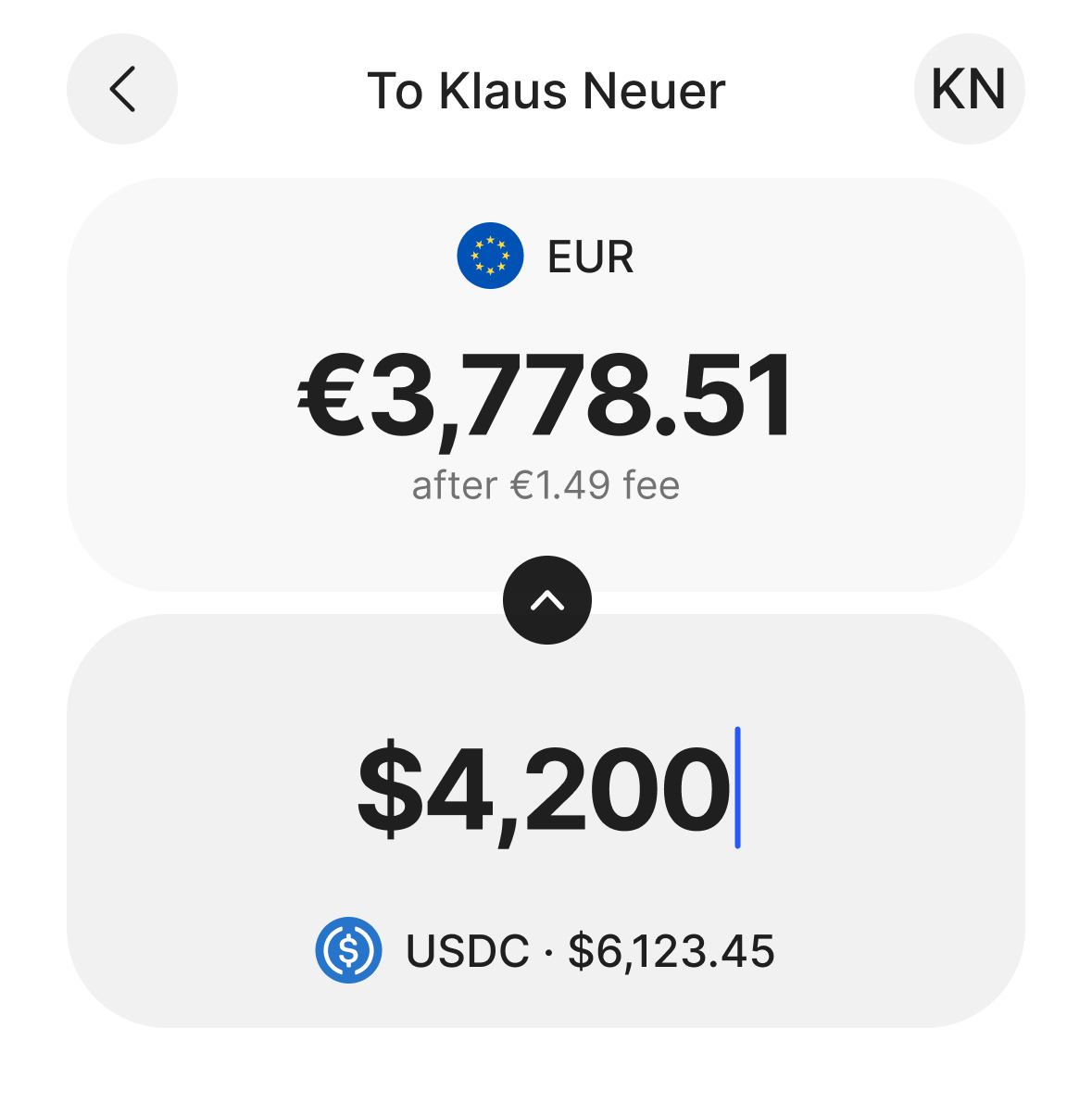
- Stablecoin settlement in USDC, EURC, and USDT, in under three minutes, 24/7
- Virtual accounts in EUR, GBP, USD, MXN, AED, BRL and more
- Built-in compliance: automated KYC/KYB, AML screening, and regulatory registrations across the EU, UK, Canada, US, and LATAM
The licensing and banking relationships that take 2 to 3 years to build in-house are already in place. Fintechs using Due launch into new corridors in days rather than months.
For a comparison of the full provider landscape, see 12 Best Stablecoin Payment Providers Compared (2026). For a deeper look at cross-border infrastructure evaluation, see B2B cross-border payments: rails, costs, and how to choose.
Book a demo to see which corridors Due covers for your use case.